







Developing Proficiency
Instructional Focus for ELLs
In order to support the literacy development of students at the Developing Proficiency level, it is important to offer an appropriate balance of language and literacy activities in the teaching program. At this point because they have some fluency in oral language more emphasis can be placed on building print-related skills.
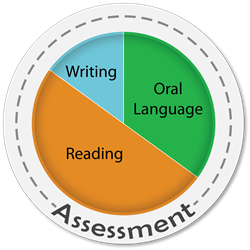
The best balance for each student will vary but, in general, the focus in the classroom should be on teaching the key skills required in beginning reading and writing and on providing motivating practice in shared, guided, and independent reading and writing contexts. Explicit instruction and modeling are key, gradually releasing responsibility to the students as they become more confident. The "Healthy Plate" above suggests a relative balance of oral language, reading and writing activities for students at the Developing Proficiency level. Reading is given a greater emphasis than writing at this stage because understanding of language precedes expression – so written expression is more challenging. Ongoing informal assessment should determine the specific balance for each student and for the class as a whole.
Oral and Written Language
Foundations of Literacy
The purpose of reading is to get meaning from printed text and the purpose of writing is to convey meaning with text. Two main types of components are both essential to reading comprehension and written composition: Oral Language Abilities and Printed-Related Skills. See the Food Groups tab on this site for an elaboration of each of the key "food groups" for literacy, clustered under each of these main components.
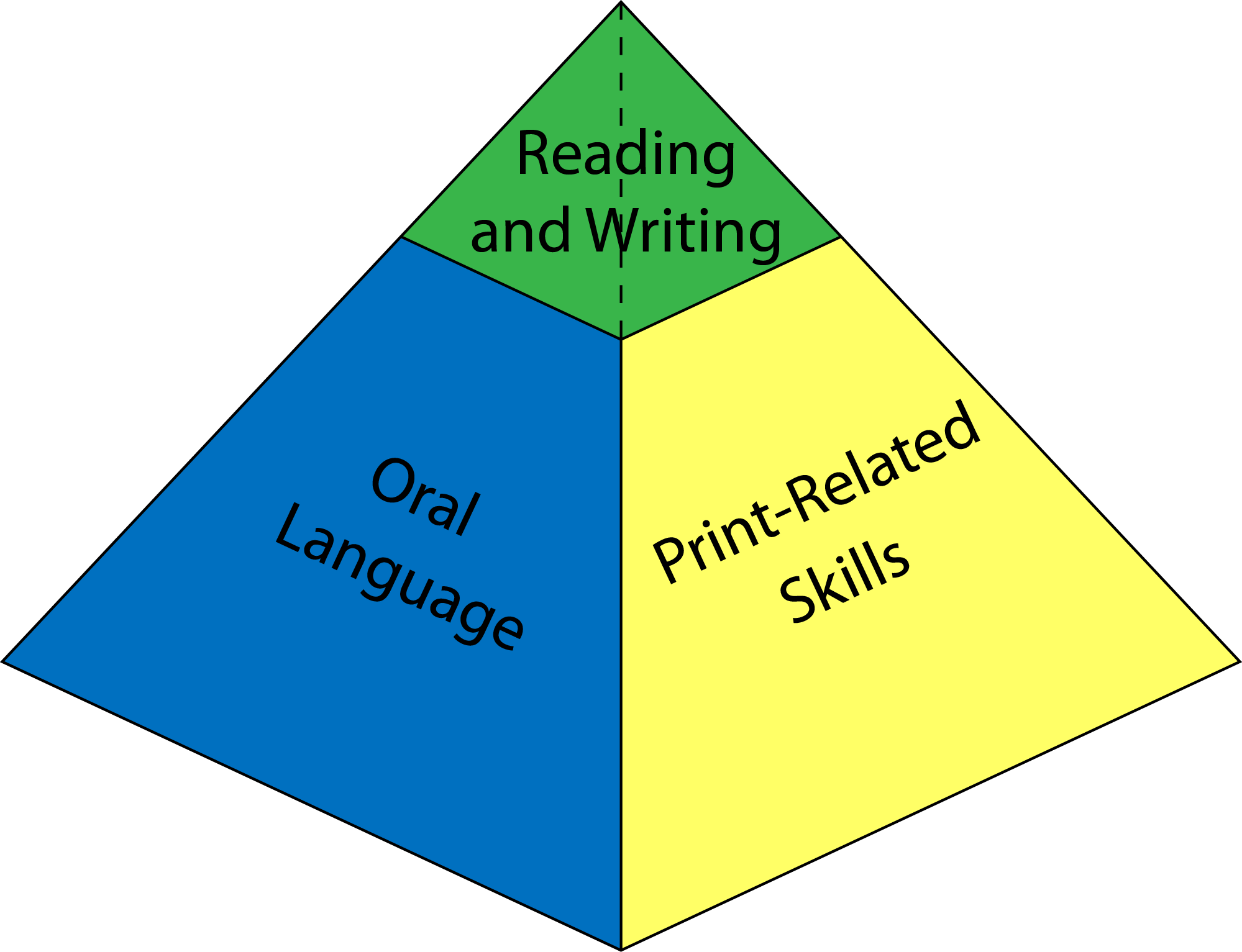
Oral Language Abilities:
For Developing Proficiency ELLs, their Oral Language abilities in English – their understanding of the language they hear and their ability to express themselves in spoken language – appear to be fairly well developed in social situations. However, their mastery of the language of school lags considerably behind. Thus the emphasis in the oral language component of their literacy program needs to shift toward building content vocabulary and academic language through both direct and indirect instruction in the following literacy diet "food groups":
- Oral Language
- Vocabulary
- Knowledge Building
Print-Related Skills:
In addition to further developing their oral language facility, Developing Fluency ELLs need to become confident users of the printed symbol system in their reading and in writing. Thus the following literacy diet food groups require emphasis at this point:
- Letter-Sounds & Phonics
- Spelling & Word Study
- Writing Conventions
- Reading Fluency & Expression
- Text Structures & Genres
- Reading Comprehension Strategies
- Writing Processes & Strategies
*IMPORTANT NOTE: Not all students begin at the same place – their level of language and literacy in their L1 will play a role in how they progress in their L2. Students can be at the Developing Proficiency level in various grades. Thus, for older Developing Proficiency students, the activities presented in this section will need to be modified to suit the age and maturity of the students, but the basic principles underlying them apply: the activities need to involve a range of supports and promote active engagement.
Useful Additional Resources:
In the Classroom: Learn about using classroom texts, find out what whole-child literacy instruction looks like, and dive deeper into comprehension, content area literacy, writing, and social-emotional learning.
English Language Learners: This resource outlines effective approaches to teaching ELL students in schools, ways to create a welcoming classroom environment and strategies to promote family involvement in students' literacy development.
Developing Proficiency in the Classroom
Tour a Classroom
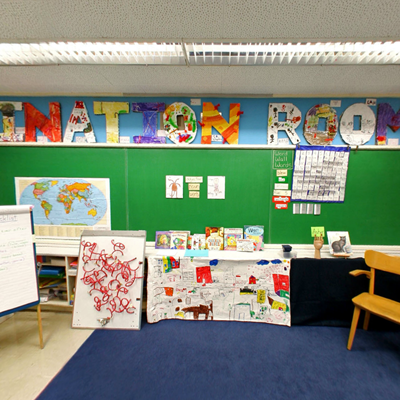
Meet the Teacher
Oral Language
Teaching tips:
- Explain, demonstrate and model new lessons to ensure that students understand expectations
- Co-develop "success criteria" in various curriculum areas so that students will learn to self-monitor
- Teach and practice all new academic vocabulary
- Encourage students to use the proper vocabulary terms in various curriculum areas
- Extend knowledge and vocabulary by reading aloud from fiction and nonfiction daily
- Introduce and discuss new vocabulary and concepts before, during and after read alouds
- Continue to build knowledge through shared experiences, videos and the internet
- Extend vocabulary development both directly and indirectly throughout the day
- Provide many opportunities for students to express their ideas orally in class
- Teach students how to generate questions that will move their dialogue forward
Reading
Teaching tips:
- Create a print-rich environment with an extensive classroom library including various genres and student-created books and projects
- Use an interactive white board, computer monitor or document projector to support read alouds and shared reading
- In the 2nd-3rd grade range, guided and independent reading activities should be used to promote fluency and comprehension
- Ensure that student get extensive reading practice so they are able to read common words with ease and attack unknown words using decoding strategies
- In 2nd and 3rd grade have students read aloud to a partner or perform readers' theater to develop fluency and expression
- Provide leveled books for guided and independent reading
- Throughout the primary grades teach effective comprehension strategies in shared and guided reading contexts
- Foster a love of reading!
Writing
Teaching tips:
- Motivate interest in writing through the use of technology such as interactive white boards, tablets and computers
- Co-create a grade-appropriate word wall to consolidate and extend students' spelling of high frequency words
- Co-create separate word walls for content area vocabulary – for example use a "math word wall" for math words
- Model the use of the word walls to support spelling, word study and writing
- Increase focus on word usage and grammar
- Encourage use of new and interesting words in writing
- Introduce various text structures and genres in reading and follow up with writing activities involving similar text formats
- Develop students' analytical and critical thinking skills through written responses and reflections
Classroom Wisdom from an ESL Teacher
An experienced ESL/ELL teacher discusses the importance of capitalizing on students' interests to engage them in language building and literacy activities in the classroom.
Student-Directed Learning in ESL: Fostering Engagement with Technology, Games and Interests
Featured Videos
Expert Insights
Dr. Jim Cummins outlines a range of effective strategies teachers and parents can use to support the development of second language literacy.
ESL Strategy Toolkit: Language Scaffolding Across Subjects
Classroom Strategies
Haiku Poetry: Using Adjectives in Writing
Wheel of Fortune: A Word Wall Activity
More Developing Proficiency Literacy Recipes and Videos


 Re-Enacting Procedures: Building the Foundation for Procedural Writing
PreK - 2nd
Attack that Word: Reviewing Decoding Strategies
1st - 3rd
Bubble Diagram: A Pre-Writing Strategy for Stories
2nd - 6th
A Visual Portfolio: Using a Writing Wall to Track Development (Virtual Tour)
1st - 5th
What's the Big Idea?: Understanding the Author's Message (Virtual Tour)
1st - 3rd
