







Special Literacy Diets: Overview
Understanding and Supporting Students with Learning Difficulties and Disabilities
A Simple Model of Reading and Writing
Oral Language & Print-Related Skills
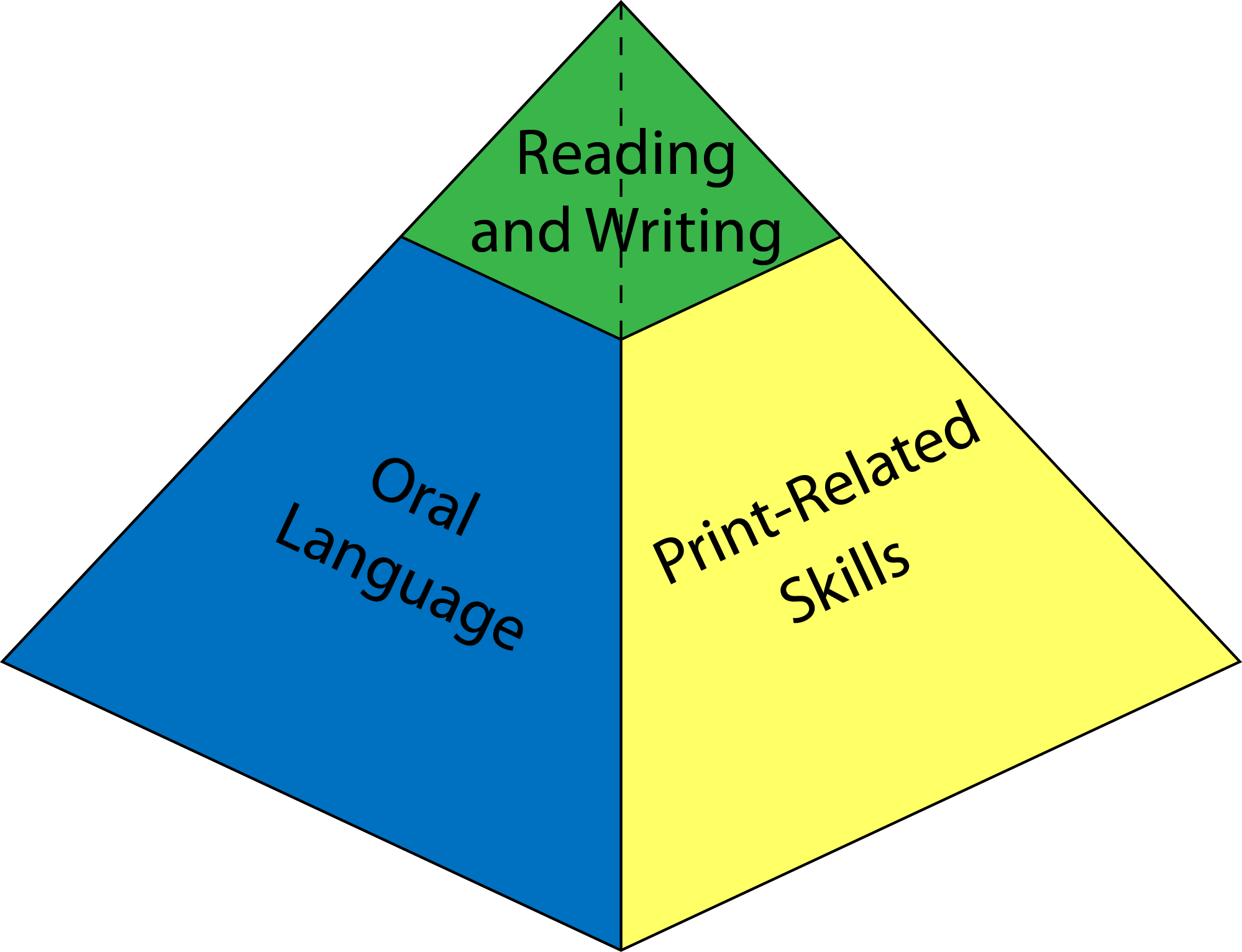
Research has demonstrated that a "simple view" of reading and writing can account for how well students understand what they read and how well they are able to express themselves in writing. Based on this view, the building blocks of reading and writing can be divided into two main categories: language-related skills (blue) and print-related skills (yellow). Language-related skills support a student's ability to understand and use spoken and written language. Print-related skills are those that promote a student's ability to decode or recognize (read) words and to encode or spell (write) words.
Regular vs Special Education
Teachers of struggling readers and writers must provide their students with enough of the essential language- and print-related skills to ensure literacy growth. The main sections of the Balanced Literacy Diet website are designed to help educators put research into practice in the elementary classroom. The website explains and demonstrates how to implement an appropriate balance of the key evidence-based "food groups" to support the literacy growth of all students. Some students will struggle, however, despite receiving a balanced and appealing literacy diet in the classroom. This Special Literacy Diets section of the website applies a simple model for understanding why some students have difficulty learning to read and write and presents effective strategies to help these strugglers achieve success.
"With what is known about the reading process, there is little excuse for allowing a child to fail in school, and possibly throughout life." - Eileen Simpson
"Virtually every student can be taught to read and write in the elementary grades, irrespective of risk factors such as poverty and home language." - Dale Willows
"Strategies for teaching children with LD are not a mystery; they are known to be good for any emergent reader. The difference is that they are essential for children with LD—and sometimes in higher doses and greater intensity than for other students." - Leila Feister
"Whereas spoken language is instinctive and natural - you don't have to teach a baby to speak, you just expose that baby to a spoken language and that baby will learn, eventually, to speak - reading has to be taught. It's artificial, it's acquired." - Sally Shaywitz
A Very Special Classroom
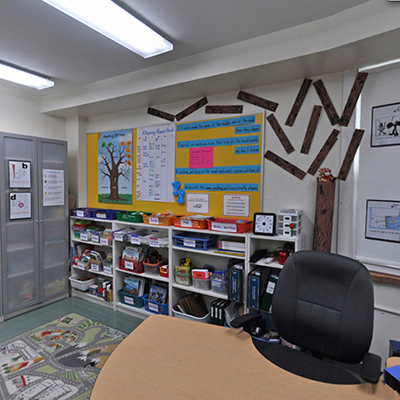
Below is a virtual tour of a Primary Special Education classroom that is geared to the needs and developmental maturity of second-grade students who have learning disabilities that affect their language-related or print-related skills or both.
Tour the Classroom
Tour this classroom and gain a wealth of insight from a skilled special education teacher about how to assess and teach students with learning disabilities that seriously impede their progress in reading and writing. To enter and explore the classroom, click on the image.
Meet the Teacher
A special educator shares her approach to teaching students with learning disabilities in an intensive support context.
Hear from the Experts
Technology and Education Expert discusses the role of assistive technology in supporting students with learning disabilities
Special Education Teacher discusses where to begin in creating a program for struggling readers
Speech and Language Specialist discusses using oral language to develop written expression
ELL and Literacy Expert discusses the process of identifying learning disabilities in ELL students
