







Emerging Proficiency
Instructional Focus for ELLs
In order to support the literacy development of students at the Emerging Proficiency level, it is important to offer an appropriate balance of language and literacy activities in the teaching program.
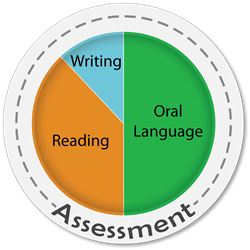
Oral and Written Language
Foundations of Literacy
The purpose of reading is to get meaning from printed text and the purpose of writing is to convey meaning with text. There are two main components that are both essential to reading comprehension and written composition: Oral Language abilities and Printed-Related Skills.
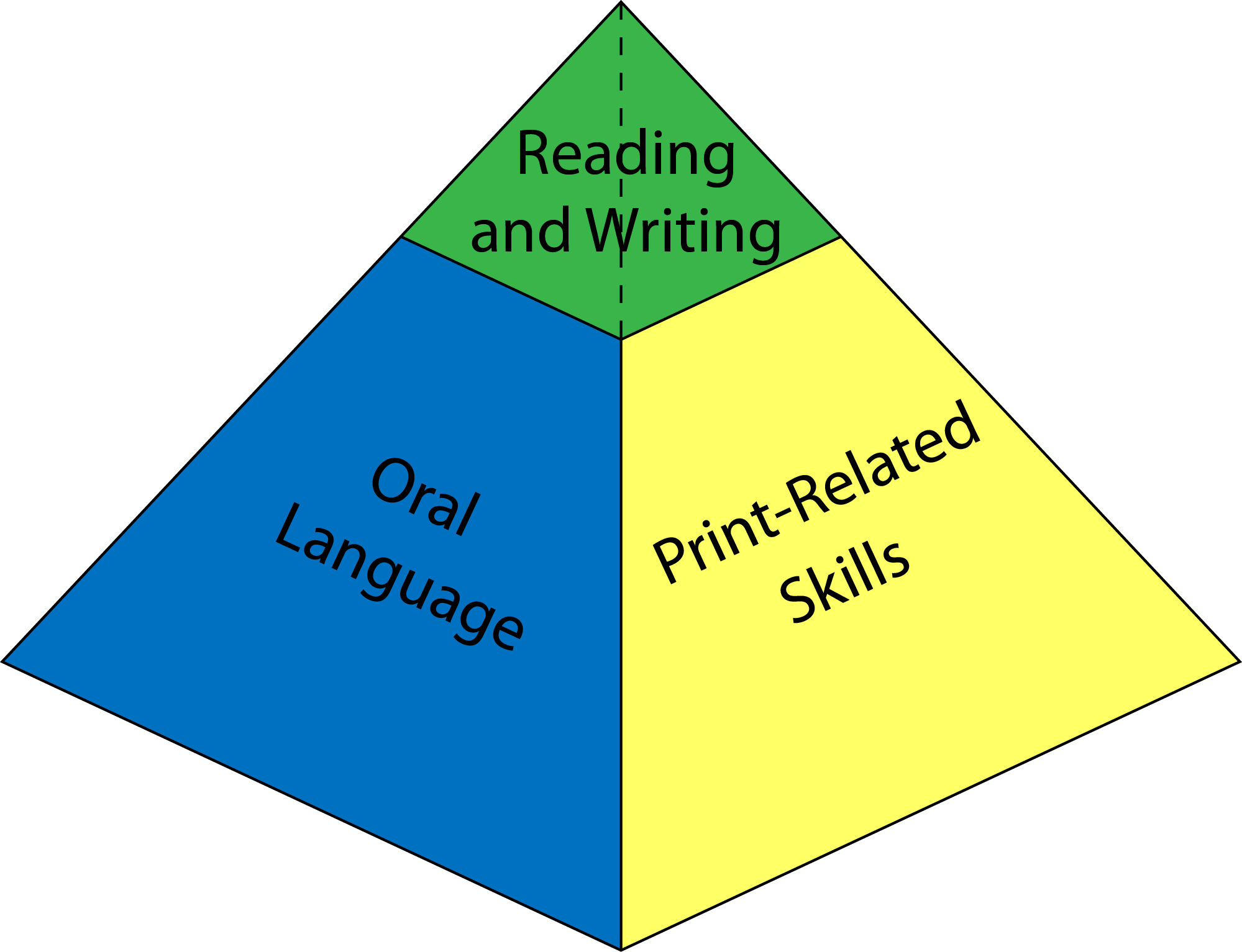
Oral Language Abilities:
For Emerging Proficiency ELLs, their Oral Language abilities in English – their understanding of the language they hear and their ability to express themselves in spoken language – are limited or nonexistent. Thus the initial focus in their literacy program must be on developing ELLs' comprehension and expression in oral language. The following Oral Language "Food Groups" in the Balanced Literacy Diet should be emphasized at this early stage:
- Oral Language (Receptive & Expressive)
- Vocabulary
- Phonemic Awareness
Print-Related Skills:
In addition to developing oral language abilities, everyone learning to read and write must be able to recognize and use the printed symbol system. This is true for ELLs as well, but in the earliest stages of their oral language development in English, the emphasis in the literacy program – the "Healthy Plate" that will best support their growth in literacy – needs to focus more on building the oral language foundation than on the fine details of how the printed system represents that language.
- Motivation for Literacy
- Concepts of Print
- Letter-Sounds & Phonics
Useful Additional Resources:
Reading Rockets, a companion site to Colorin Colorado, is a comprehensive research-informed literacy website that includes extensive information about all aspects of literacy education. For information particularly relevant to the Emerging Proficiency level see:
In the Classroom: Learn about using classroom texts, find out what whole-child literacy instruction looks like, and dive deeper into comprehension, content area literacy, writing, and social-emotional learning.
English Language Learners: Learn about the most effective ways to teach ELL students, how to create a welcoming classroom, and ways to promote family involvement.
Emerging Proficiency in the Classroom
Tour a Classroom
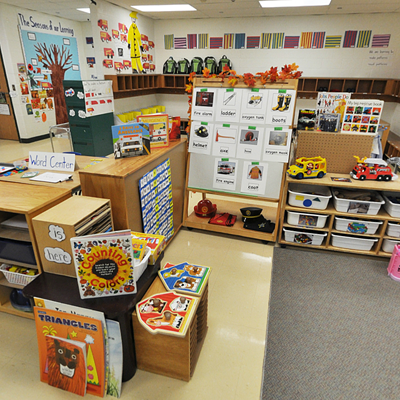
Meet the Teacher
Practical Strategies for the Classroom
Oral Language
Teaching tips:
- Convey meaning through modeling and demonstrations
- Provide picture labels on objects and words
- Read aloud from fiction and nonfiction big books
- Introduce vocabulary with pictures before read alouds
- Build knowledge through shared experiences and videos
- Use puppets and props to promote student involvement
- Build vocabulary using action songs and drama centers
- Provide many opportunities for students to talk
- Support all attempts at oral participation
-
Build phonological awareness with activities involving syllables, rhymes and compound words
-
Provide phonemic awareness instruction through many engaging oral activities playing with the sounds in words
Reading
Teaching tips:
- Make the classroom a print-rich environment
- Use large-print picture books for read alouds
- Share big books and charts to build concepts of print
- Engage students with books through reenacting stories
- Once phonemic awareness is established introduce the letter-sounds in an explicit and systematic way
- Practice blending letter-sounds into words and reading easy decodable books
- Introduce common high-frequency words on a word wall
- Provide leveled books for guided and independent reading
Writing
Teaching tips:
- As part of letter-sound instruction teach letter formation
- Model and encourage the use of inventive spelling
- Provide many opportunities for the children to create labels around the classroom
- Do shared writing with the students by "sharing the pen" when writing on charts and on the board
- Provide students with opportunities to write in meaningful contexts throughout the day
- Include writing activities as follow-ups to read alouds and other reading activities
- Encourage students to include new vocabulary words in their writing
- Motivate interest in writing through the use of technology such as interactive white boards, tablets and computers
Classroom Wisdom from an ESL Teacher
An experienced ESL/ELL teacher explains how to bridge the gap between understanding and speaking in the earliest stages of oral language proficiency.
Listening and Learning Without Talking: Recognizing the Silent Period of Language Acquisition
Featured Videos
Expert Insights
Dr. Jim Cummins draws important distinctions between Social Language Proficiency and Academic Language Proficiency in ELLs.
From Conversation to the Classroom: On Teaching Low Frequency Words
Classroom Strategies
Songs and Actions: Developing Listening, Language and Vocabulary
Five Senses Fun: Developing Beginning Descriptive Language
More Emerging Proficiency Literacy Recipes and Videos


 Pick a Play Area: Developing Math, Language, and Literacy Skills
PreK - 1st
Investigating Cereal: Integrating Literacy and Science Instruction
1st - 3rd
Making Teddy Bears: Motivating Descriptive Writing
K - 2nd
Letter-Sound Hokey Pokey: Motivating Children with Songs and Actions
PreK - 1st
Interactive Story Retelling: Encouraging Retelling with Picture Supports
PreK - 1st
